
A clear guide to thyroid swelling (goitre), thyroid nodules and thyroid surgery – how they are checked, when surgery is needed, and what recovery looks like.
By Dr. Gouda Ramesh, MS (ENT) · Chief ENT & Head and Neck Surgeon · Updated 26 October 2026
Book Appointment → · WhatsApp Us
20+ Years experience · 30,000+ ENT surgeries · 3 Branches (kukatpally,Hanamkonda,Chandanagar)
Thyroid evaluation and surgery by ENT & head and neck surgeons. Y Junction, beside Balanagar Metro Station, Kukatpally, Hyderabad.
Quick answer
Most thyroid problems do not need surgery. A neck swelling or nodule is first checked with blood tests, a neck ultrasound and, when needed, an FNAC needle test. Surgery (thyroidectomy) is usually advised for suspicious or cancerous nodules and for goitres that press on the windpipe or food pipe. At Gouda Ramesh ENT Hospital in Kukatpally, ENT surgeons guide you from the first check to recovery.
Key points
- See an ENT surgeon for a lump or swelling in the neck, voice change or swallowing difficulty.
- Most thyroid nodules are not cancer – ultrasound and FNAC help sort them.
- Surgery can remove half the gland or all of it; after total removal, a daily hormone tablet is needed.
- Recovery varies – many patients resume light routine within 1–2 weeks.
Thyroid problems we treat
These are the thyroid conditions that most often bring patients to an ENT and head & neck surgeon.
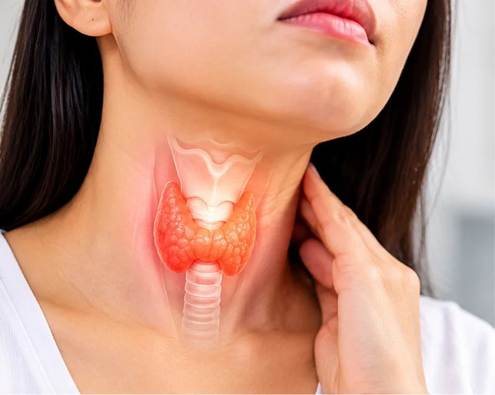
Goitre (thyroid swelling)
An enlarged thyroid that may show as a neck swelling or press on the windpipe or food pipe.
Thyroid nodules
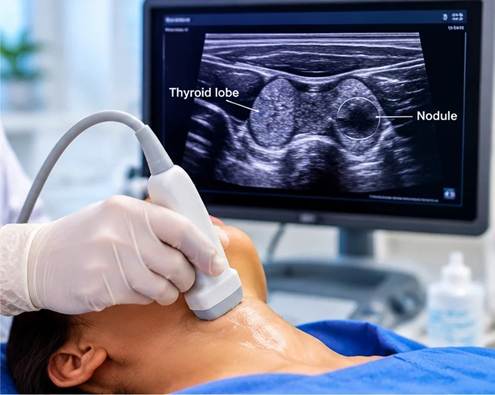
Lumps inside the thyroid. Most are not cancer, but some need testing.
Thyroid cancer
Often found as a painless lump; usually treated with surgery, planned after FNAC and scans.
Overactive thyroid
Usually treated first with medicines, sometimes radioactive iodine; surgery when these don’t work or aren’t suitable.
Footnote: We also see thyroiditis (inflammation of the gland) and check the neck in underactive thyroid (hypothyroidism) when a swelling is present.
Related head & neck conditions
Not every neck lump is the thyroid. Our ENT surgeons also treat these.
| Card (internal link) | Copy | Image (Media Library) |
| Parotid swelling | Lumps in the salivary gland in front of the ear. | patriod.png (2026/08) |
| Submandibular gland swelling | Swelling under the jaw, often from stones or infection. | sub_cropped.webp (2026/08) |
| Neck lymph node swelling | Enlarged neck glands that may need a biopsy. | cervical-lymphnode.jpg (2026/08) |
ENT surgeon or endocrinologist?
Both treat thyroid disease, and they often work together.
| See an ENT / head & neck surgeon if you have… | See a physician / endocrinologist if you have… |
| A lump or swelling in the neck | An abnormal thyroid blood test but no swelling |
| A thyroid nodule found on a scan | Hormone symptoms like tiredness or weight change, with a normal neck |
| Voice change, swallowing or breathing difficulty | Need for long-term hormone tablet adjustment |
| A recommendation for thyroid surgery | Overactive thyroid being treated with medicines |
Who may need a thyroid evaluation?
A quick check is worthwhile if any of these sound familiar.
Consider an ENT assessment if you have:
- A swelling or lump in the neck, at the front
- A feeling of something stuck in the throat, or difficulty swallowing
- Hoarseness or voice change lasting more than 3 weeks
- Breathlessness or noisy breathing, especially when lying flat
- A thyroid nodule found by chance on a scan done for something else
- Unexplained weight change, tiredness, palpitations or heat/cold intolerance
Medicines first, surgery when needed
| Situation | Usual approach |
| Underactive thyroid, no swelling | Daily thyroid hormone tablet, blood test follow-up |
| Overactive thyroid | Medicines first; radioactive iodine or surgery if they fail or aren’t suitable |
| Small nodule, FNAC benign | Periodic ultrasound at intervals your doctor advises |
| Suspicious or cancerous nodule | Thyroid surgery |
| Large goitre with pressure symptoms | Thyroid surgery |
Warning callout: Seek urgent care if a neck swelling grows quickly, or if you have difficulty breathing or swallowing. Call +91 95505 74871 or go to the nearest emergency department.
How is thyroid disease diagnosed?
Your doctor chooses the tests based on your symptoms and examination.
| Icon card | Copy |
| Neck examination | Size, texture and movement of the thyroid, and nearby lymph nodes. |
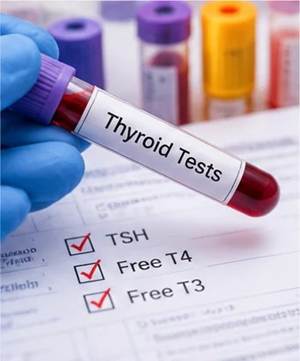
| Thyroid blood tests | TSH, T3 and T4 show whether the gland is underactive, overactive or normal. |
| Neck ultrasound | Shows nodules in detail and guides the next step. |
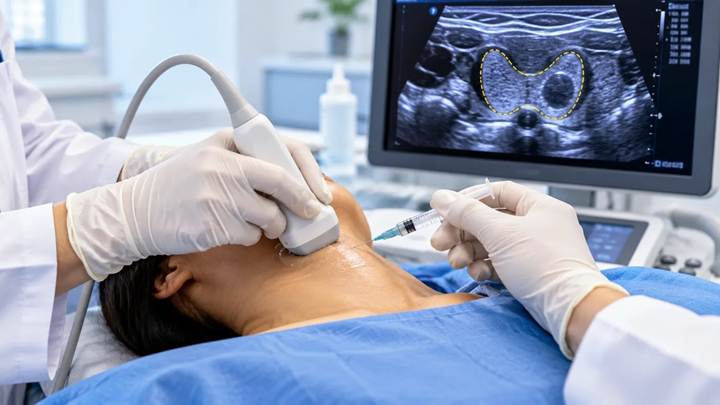
| FNAC | A thin needle takes cells from a nodule. The report usually classifies them as benign, suspicious (indeterminate) or malignant; sometimes it needs repeating. |
| Vocal cord check | Done before surgery to record how the voice box is working. |
| CT scan, when needed | For example, for a large goitre extending into the chest. |
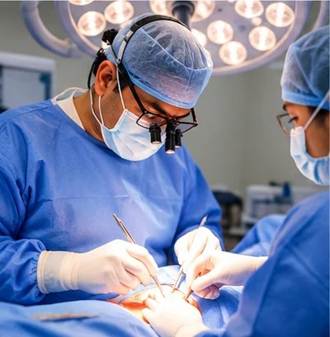
Types of thyroid surgery
The operation depends on the diagnosis, the size of the gland and the FNAC result.
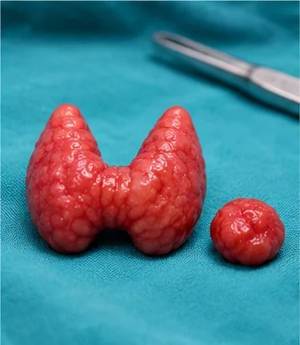
Hemithyroidectomy (removing half the gland)
Removes one lobe of the thyroid, often for a single nodule or an uncertain FNAC result. The remaining half often keeps making enough hormone.
Total thyroidectomy (removing the whole gland)
Used for some thyroid cancers, large goitres and some cases of overactive thyroid. A daily thyroid hormone tablet is needed afterwards.
Neck node removal
Added in some thyroid cancers when nearby lymph nodes are involved.
Info callout: Sometimes, more than one step is needed. If the biopsy after a hemithyroidectomy shows cancer, a second operation may be advised. Your surgeon explains this possibility before surgery.
Your treatment journey
- Appointment – Book online, by phone or WhatsApp.
- Consultation – Symptoms, history and neck examination.
- Diagnosis – Blood tests, ultrasound and FNAC as needed.
- Treatment plan – Monitoring, medicines or surgery explained.
- Procedure – Thyroidectomy, if advised.
- Recovery – Follow-up, biopsy report and tablets.
How is thyroid surgery performed?
An overview of what happens on the day of a thyroidectomy.
| Step | What it involves |
| Anaesthesia | General anaesthesia – you are asleep throughout. |
| Incision | A small cut, usually in a natural crease of the lower neck. |
| Protecting key structures | The surgeon identifies and protects the voice nerves and the small parathyroid glands that control calcium. |
| Removal | Half or all of the gland is removed and sent for biopsy. |
| Duration and stay | Vary with the type of surgery and recovery; some patients may go home the same day or after an overnight stay. |
Green callout: Thyroid surgery in Kukatpally – patients from Kukatpally, KPHB, Moosapet and Balanagar don’t need to travel across Hyderabad for a thyroidectomy. (Verify thyroidectomy is done at the Kukatpally branch.)
Recovery after thyroid surgery
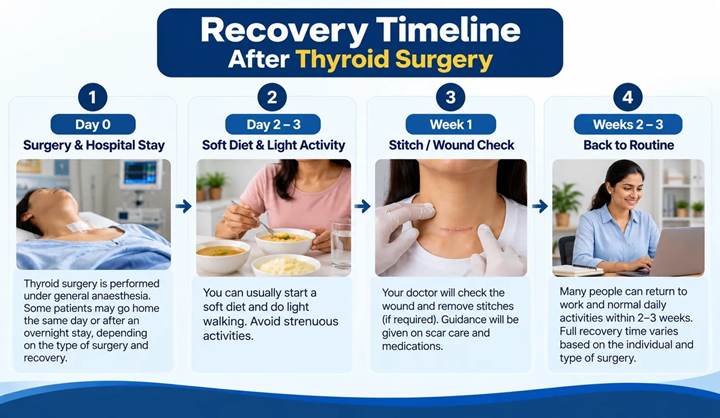
Many patients resume light routine within 1–2 weeks, while full recovery varies.
| Stage | What to expect |
| Surgery day | Monitoring after surgery; you go home the same day or after an overnight stay, as advised. |
| First few days | Neck soreness and a mild sore throat are common; rest and light walking. |
| Around week 1 | Wound check, blood tests (including calcium) and the biopsy report. |
| Weeks 1–2 | Many patients resume light routine and desk work. |
| Following weeks | Return to heavier activity when your surgeon advises; the scar keeps fading over months. |
General aftercare reminders
- Keep the wound clean and dry as instructed
- Take thyroid or calcium tablets exactly as prescribed
- Avoid heavy lifting and strenuous exercise for as long as your surgeon advises
- Don’t miss the follow-up visit
When to contact the hospital urgently
Call +91 95505 74871 straight away if you notice increasing neck swelling, breathing difficulty, tingling or cramps in the fingers or around the lips, fever, or discharge from the wound.
Is Thyroid Surgery Safe? Understanding Risks
Thyroidectomy is a well-established operation, but like any surgery it carries risks. Your surgeon explains them before you decide.
Possible risks include
- Temporary hoarseness or a weak voice, which usually improves within weeks
- Temporarily low calcium, causing tingling in the fingers or lips, treated with calcium tablets
- Bleeding or swelling in the neck – uncommon, but needs prompt attention
- Rarely, a lasting voice change or long-term need for calcium tablets
Thyroid Surgery Cost in Kukatpally
The cost depends on your diagnosis and the plan. You receive a written estimate after your consultation and test review.
| Icon card | Copy |
| Type of surgery | Hemithyroidectomy or total thyroidectomy. |
| Extent | Whether neck lymph nodes also need removal. |
| Tests | Blood tests, ultrasound, FNAC and any scans. |
| Hospital stay | Same day or overnight, depending on recovery. |
| Medicines | Post-surgery tablets and follow-up tests. |
| Insurance | Coverage under your policy or scheme. |
Insurance reminder: Arogyasri, EHS and cashless insurance are subject to eligibility, authorization and policy terms. Our desk checks your coverage before admission. Call +91 95505 74871.
Meet your ENT specialist
Dr. Gouda Ramesh
MBBS (Osmania Medical College, Hyderabad) · MS ENT (Kakatiya Medical College, Warangal)
Founder & Chief ENT Surgeon, Gouda Ramesh ENT Hospital
Tags: Thyroid surgery · Head & neck surgery · Endoscopic sinus surgery · Laser micro-laryngeal surgery
Dr. Gouda Ramesh started the hospital at Kukatpally Y Junction, which remains its flagship branch. He is joined at Kukatpally by Dr. S. Nandini (DA, MS ENT) and Dr. J. Lingaiah (MBBS, MS ENT). Patients looking for a thyroid specialist in Kukatpally or a thyroid doctor near KPHB can consult the team at Y Junction.

Book Appointment → · View Profile
FAQs
Note : These answers are general information. Your surgeon will advise you based on your own tests.
1. Where can I get thyroid treatment in Kukatpally?
Gouda Ramesh ENT Hospital at Y Junction, Kukatpally, beside Balanagar Metro Station, evaluates thyroid swellings and nodules and performs thyroid surgery. The hospital also has branches in Chandanagar and Hanamkonda.
2. Is a thyroid nodule cancer?
Most thyroid nodules are not cancer. A neck ultrasound and, when needed, an FNAC needle test help classify a nodule as benign, suspicious or malignant, and guide whether it needs surgery.
3. Is thyroid surgery painful?
The operation is done under general anaesthesia, so you feel nothing during it. Neck soreness and a sore throat are common for a few days afterwards and are managed with pain relief.
4. Will there be a visible scar?
The cut is usually placed in a natural crease of the lower neck. The scar is often pink at first and tends to fade over several months.
5. Will my voice change after thyroid surgery?
Some patients have a hoarse or weak voice for a few days to weeks after surgery, which usually recovers. Surgeons protect the voice nerves during the operation, and a lasting voice change is uncommon.
6. Will I need tablets for life after thyroidectomy?
After a total thyroidectomy, yes – a daily thyroid hormone tablet replaces the gland’s work. After removal of only half the gland, many people do not need tablets, but blood tests will confirm this.
7. Can goitre be treated without surgery?
Small goitres that cause no symptoms and have normal tests are often just monitored. Surgery is advised when a goitre presses on the windpipe or food pipe, keeps growing, looks suspicious or affects appearance significantly.
8. How long is the hospital stay and recovery?
Hospital stay depends on the type of surgery and recovery; some patients may go home the same day or after an overnight stay. Many patients resume light routine within 1–2 weeks, while full recovery varies.
9. Is thyroid surgery covered by Arogyasri or insurance?
Gouda Ramesh ENT Hospital works with Arogyasri, EHS and cashless insurance, subject to eligibility, authorization and policy terms. Our desk checks your coverage for thyroid surgery before admission.
Noticed a swelling or lump in your neck?
Get it checked by an ENT surgeon at our Kukatpally branch, Y Junction, beside Balanagar Metro Station.
Mon–Sat 10:00 AM–9:00 PM · Sun 10:00 AM–7:30 PM
Book Appointment → · Call +91 95505 74871
Disclaimer: This page gives general information about thyroid conditions and is not a substitute for medical advice. Treatment decisions are made only after a consultation and review of your tests. Written and reviewed by Dr. Gouda Ramesh, MS ENT. Last updated 26 October 2026.